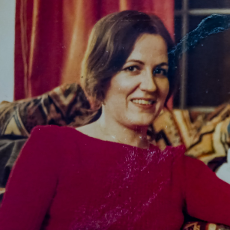
Professor Emerita Gail Stygall passed away on September 25, 2025. Our Language and Rhetoric colleagues, both past and present (Anis Bawarshi, Candice Rai, Colette Moore, Nancy Bou Ayash, Stephanie Kerschbaum, Sandy Silberstein, Juan Guerra, Suhanthie Motha, and Priti Sandhu) took the initiative to write the remembrance below, which we wanted to include in the final newsletter of this academic year.
It is with sadness that we report that our colleague, emeritus professor Gail Stygall, passed away on September 25th, 2025.
Gail Stygall was a leading scholar in both the language of law and rhetoric/composition. In her 31 years at UW, Gail’s teaching and research—along with her faculty senate leadership, her service on the College Council and as our faculty legislative representative in Olympia, her directorship of the Expository Writing Program (now Program in Writing and Rhetoric), and work on countless committees and task forces—helped to shape the intellectual and administrative culture of the university in lasting ways.
To all of us who knew, learned from, were mentored by, and were friends with Gail, she was a fierce and brilliant person, someone with grit and fire in her commitments to our fields and for social justice, and underneath it all, big-hearted and full of kindness, empathy, and care. Beyond her excellent scholarship and tireless advocacy, she was wonderful at discerning the stakes of things. She did so much for the study of Language and Rhetoric at UW and beyond. She was also a very thoughtful and generous colleague. She always kept in mind international faculty and students who had no family nearby during the holidays and made efforts to extend invitations to her house for holiday gatherings.
Gail joined the English Department faculty in 1990 after earning her PhD at Indiana University. Her consequential career has shaped what became known as forensic linguistics and transformed first-year composition. Gail’s research and publications spanned the fields of linguistics, applied linguistics, discourse analysis, law, composition studies, and rhetoric. Her publications span these fields, including a monograph on legal language, six coedited volumes, and myriad articles, chapters, and reviews. These intersecting areas of expertise have modeled a defining feature of our Language and Rhetoric program. In her career, she taught more than 30 different courses and chaired 21 dissertation committees. Her widely cited 1994 College Composition and Communication article "Resisting Privilege: Basic Function and Foucault's Author Function” will always be one of the most impactful pieces that several of us keep coming back to as a powerful reminder that we can indeed make academia a better world worth fighting for.
Gail’s interest in legal language had its genesis in her post-college experience as a part-time court reporter where she overheard jurors deliberating the meaning of jury instructions. From the perspective of the legal profession, their interpretations were almost invariably wrong. When she returned to graduate school, jury instructions and legal language more broadly became a natural focus and the beginning of career-long consulting as an expert witness, particularly in trademark cases and jury instructions. Gail’s consulting career was one of consequence, including trademark cases involving Microsoft as well as the Navajo Nation vs. Urban Outfitters. In a death penalty case, she showed how jury instructions can unintentionally lead jurors to believe they must decide for death. In the wake of that case, the state of Washington clarified and improved instructions.
Closer to home, Gail made foundational changes in the way first-year composition instructors are prepared and how writing courses are taught, changes that continue to undergird the program. Under Gail’s directorship of the Expository Writing Program, the structure of the courses changed, shifting from a focus on individual papers to portfolios developed over an entire course with revision encouraged until submission. A further innovation was the textbook, an anthology she and her assistant directors developed and updated each year, containing readings students might encounter in other courses, thus preparing them to write in a range of disciplines.
We still remember how she fought against efforts to use AP scores to place out of composition courses. For nearly a year she stood up against state, corporate, and institutional pressure. She led a large town hall meeting where she made the case, backed by evidence, answered questions, stood for what she believed was right, and did not back down. The English department and the Humanities division continues to benefit from what she stood up and fought for, including the recognition of composition studies and the teaching of writing as intellectually vibrant and legitimate areas of inquiry.
Through her research, her public facing expertise in legal discourse, her leadership of the Expository Writing Program, her mentorship, her advocacy in the Faculty Senate, College Council, and as a legislative representative, Gail worked to make the professional life of faculty and students in subsequent generations better than it had been for hers. We are grateful to have been her colleagues.