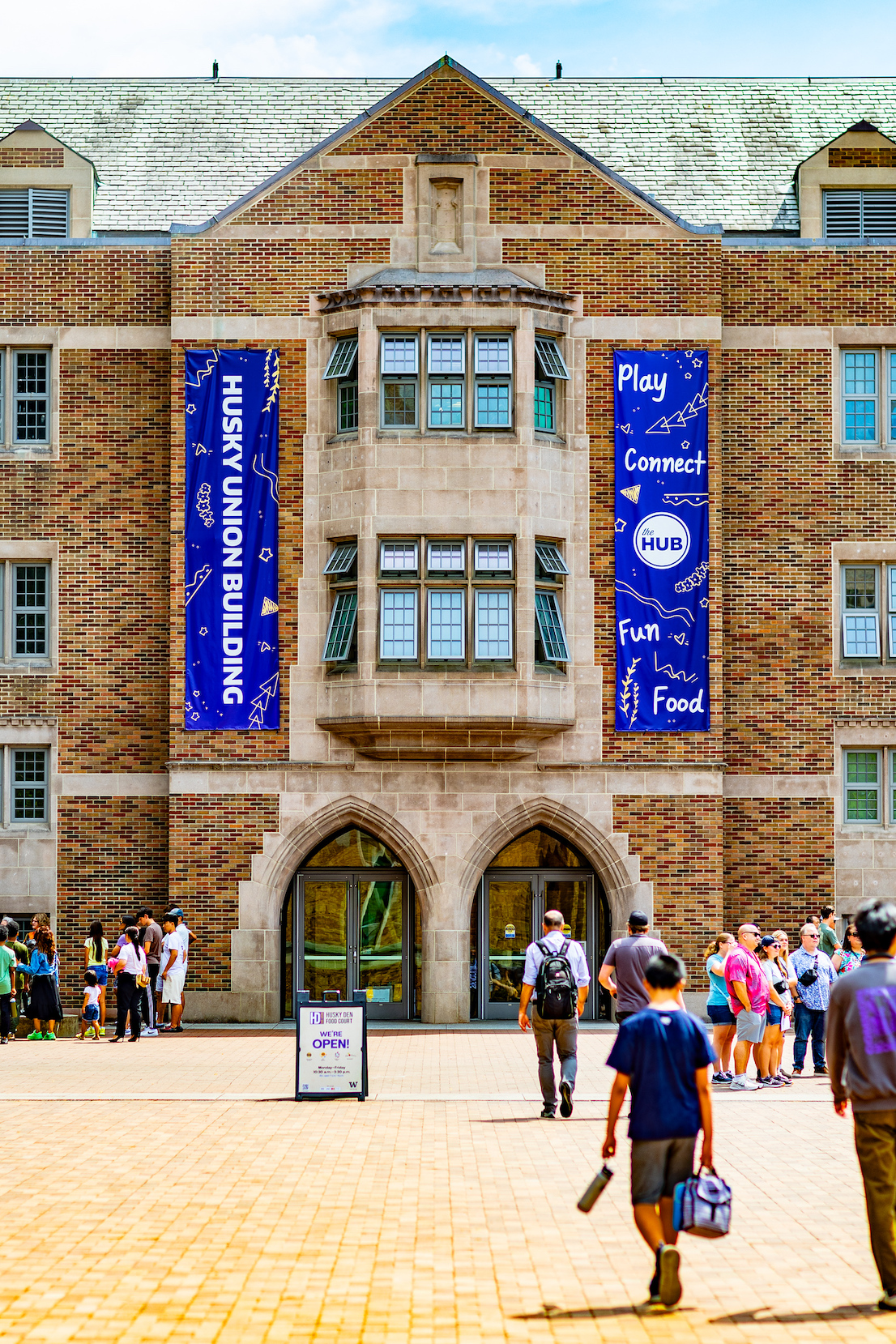
The Praxis conference returns to UW on Friday, May 29, 2026, with a full day of panels, workshops, and roundtables under the theme "Writing With." Registration opens at 9:00 AM in HUB 250 with coffee and pastries, and sessions run until 4:00 PM across HUB 250, 238, 337, and 340, plus two rooms in the Allen Library Research Commons. Every session is 75 minutes including Q&A. This article spotlights some threads and topics in the program, which can be accessed in full on the conference webpage.
The theme "Writing With" runs through everything on the schedule, and the co-chairs say it shaped the proposals they received. "One thing that's really special about this year's conference is the theme: 'Writing With,' which has encouraged presenters to propose panels, presentations, and workshops that highlight the relationality of writing processes and experiences," said Hunter Little, Assistant Teaching Professor and conference co-chair. "It's been rewarding to see how uniquely the presenters have taken up the theme to discuss writing identities and histories, institutional ecologies, digital tools and spaces, community-engaged writing and teaching, and more."
That range is visible from the first morning block. In HUB 238, Teaching Professor Megan Callow, Tabitha Espina, and Silvia Ferreira open a panel on writing program administrator collaboration across UW's three campuses, joined by students from Raisbeck Aviation High School presenting on what young scholars bring to writing. In HUB 340, Cemalcan Uslu, Mya Pwint (Brittney) Khaing, and Jamie Stout take up agency, voice, and social justice in the writing classroom. Over in the Research Commons, Joel Jacobson and Larry Uhlman host a roundtable reframing poetry analysis as translation and co-creation, while Teaching Professor Kimberlee Gillis-Bridges and Assistant Teaching Professor Jonathan Isaac run an archives workshop on activating alternative histories.
The breadth of voices in the program is something August Adent, PhD candidate and co-chair, is especially excited about. "I'm looking forward to hearing from students and teachers from such a wide range of institutions, especially those coming from high schools and two-year colleges," Adent said. "I think it'll be very generative (and fun!) to spend a day talking about what we all do in our classrooms, and I've enjoyed helping create a space where those conversations can happen."
After the morning sessions, attendees gather in HUB 250 for lunch and the keynote. Assistant Professor Victor del Hierro of the University of Florida is delivering a talk titled "Writing With-in the Cipher," drawing from his book project The DJ is Precedent: Hip Hop, Community Building, and Technical Communication. Little flagged del Hierro's keynote as a highlight for the conference's leadership team. "We are all also very excited about the opportunity to connect with the keynote speaker, Victor Del Hierro," Little said. "We are so grateful for the time he has committed to the conference and department, and we look forward to learning more about his book project."
The afternoon picks up with two more concurrent blocks. Session 2 includes panels on community and connection (with presenters working in rural classrooms, at North Seattle College, and in community-engaged writing programs), digital spaces (covering video game help screens, fanfiction in first-year composition, and student media campaigns), and a raciolinguistic walking tour led by Associate Professor Suhanthie Motha. Meanwhile, Julia Pavlick is running a workshop on trauma-informed writing pedagogy in Research Commons Red C.
Session 3 turns toward questions of resistance and responsibility. Angelique Tapia and Baylynne VanWagenen present on messy realities in technical communication research; Assistant Teaching Professor Calvin Pollak describes how students document AI-assisted communication tasks and what it means to work with and against LLMs in the workplace; and Jacob Spenser Wilson addresses "Silicon Empires" and the case for internationalism. In HUB 340, a panel on institutional ecologies includes Megan Callow and Hunter Little's own study of W Course patterns at UW, plus English Department Librarian Elliott Stevens on digital accessibility.
One of Praxis's longer-running goals is putting people in the same room who don't usually share one.
"The theme also supports one of the overarching goals of Praxis, which is to bring together members of UW's three campuses, including faculty, staff, students, and administrators, as well as those at local colleges, K-12 schools, and other community partners," Little said. "This year it was exciting to receive proposals from a couple of international applicants as well." Full abstracts for all presentations and post-conference resources will be available via QR code in the printed program at the event.
Finally, Little also credited the many other people helping to bring this event to life. "I want to acknowledge the immense amount of time and energy the rest of the Praxis Leadership Team has put into organizing this event, and to extend that thanks to the team from 2025 who provided a lot of templates for the work we have done in 2026," she said. She also thanked Mary and Allan Kollar, whose contributions to the Mary and Allan Kollar Teacher Community Support Fund make the conference possible.
Ting-Ting Shiea is also serving as co-chair of the conference, with the remaining Praxis Leadership Team consisting of Assistant Teaching Professor Frank Macarthy, Assistant Teaching Professor Linford Lamptey, and Professor Anis Bawarshi.